


A Talk on Shakespeare
Tuesday, 27 January 2026
Share this article:
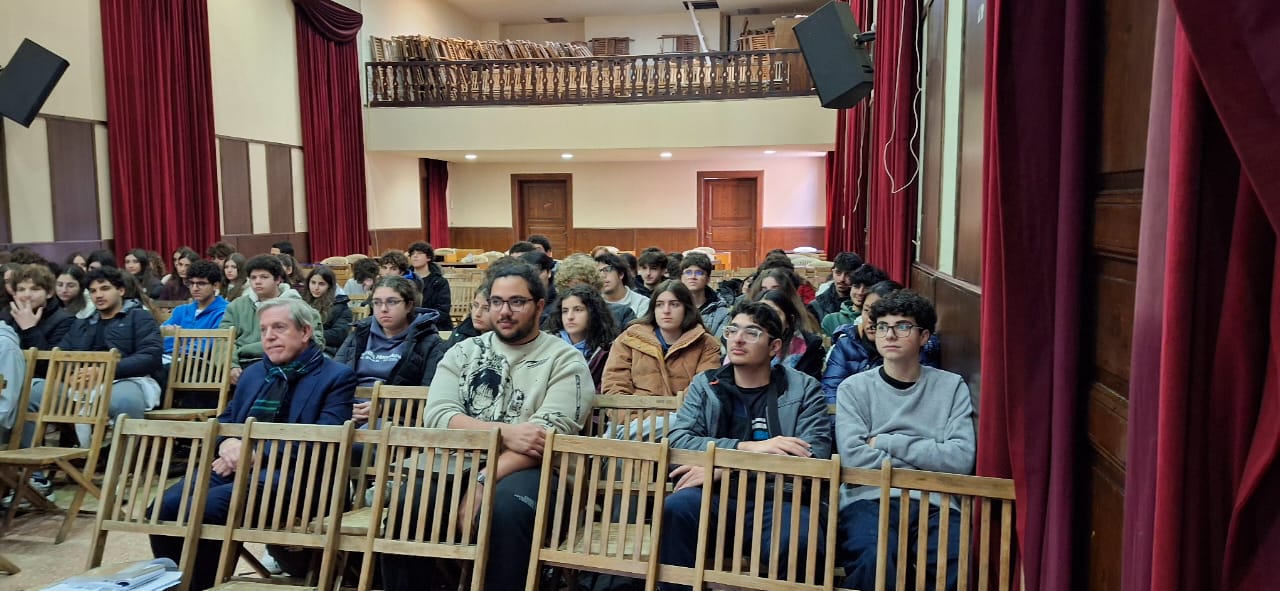
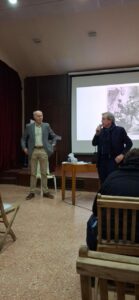
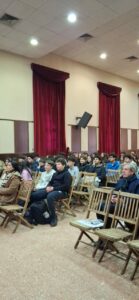
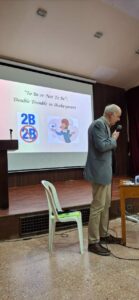
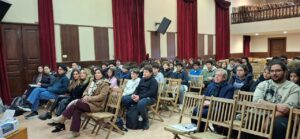
On 19th January, during the advisory period, students in grades 9 and 10 IP, IB1 and IB2 attended a talk on Shakespeare, presented by the Quaker Trustee, Mr. Jeremy Holmes. The talk was titled “Double Trouble”, revolving around doubling in three Shakespearean plays: The Taming of the Shrew, A Midsummer Night’s Dream and Hamlet. Mr. Holmes intrigued the students in many ways, often reminding them of particular aspects in the plays they studied, either by asking questions or by focusing on lines, characters and dramatic features that Shakespeare highlights in his works.
Doubling can relate to characters, language and scenes. Language alone stands as a key element that engages the audience and deepens their understanding of the playwright’s message. Linguistic doubling, for instance, reinforces themes and endows characters with a unique persona that remains memorable. Shakespeare’s famous line in Hamlet (Act III, Scene 1), “To be or not to be” introduces Hamlet’s soliloquy in which he contemplates suicide. The choice of aporia in this line intensifies the use of doubling, making Hamlet’s loss, inaction and intense pain understandable. Other forms of doubling involve roles of characters, such as authority in A Midsummer Night’s Dream through Theseus (the Duke of Athens) and Oberon (the King of the Fairies) or the mishap that Puck causes when Lysander is mistaken for Demetrius. In fact, the interplay between characters’ roles and the structure of the work itself extends beyond mere entertainment, often revealing profound messages about social class, power, values and beliefs. Hence, Shakespeare’s use of the play-within-the-play in Hamlet and A Midsummer Night’s Dream uncovers a significant layer that shapes meaning and maintains realism. Mr. Holmes explained how actors in The Mousetrap in Hamlet recreate a crime, a doubling trope that recreates King Hamlet’s death. Likewise, the actors in A Midsummer Night’s Dream perform Pyramus and Thisbe, which reflects the main plot’s themes of forbidden love and chaos. In The Taming of the Shrew, however, doubling refers both to the theatrical practice of one actor playing multiple roles and to the structural mirroring of the plot and characters. The most noteworthy example of doubling is in presenting Christopher Sly, a drunken tinker, as a lord.
Mr. Holmes showed several photos from various productions of those plays, commenting on the scenes and exploring the artistry of The Bard. There were many more details that Mr. Holmes explained, especially those that relate directly to Shakespeare himself. The talk concluded with a warm applause and great appreciation on students’ part.


 P.O. Box 36, Brummana 2761 - Lebanon
  +961 24 960 430 / 1 / 2
 info@bhs.edu.lb
 Weekly Times